Problem
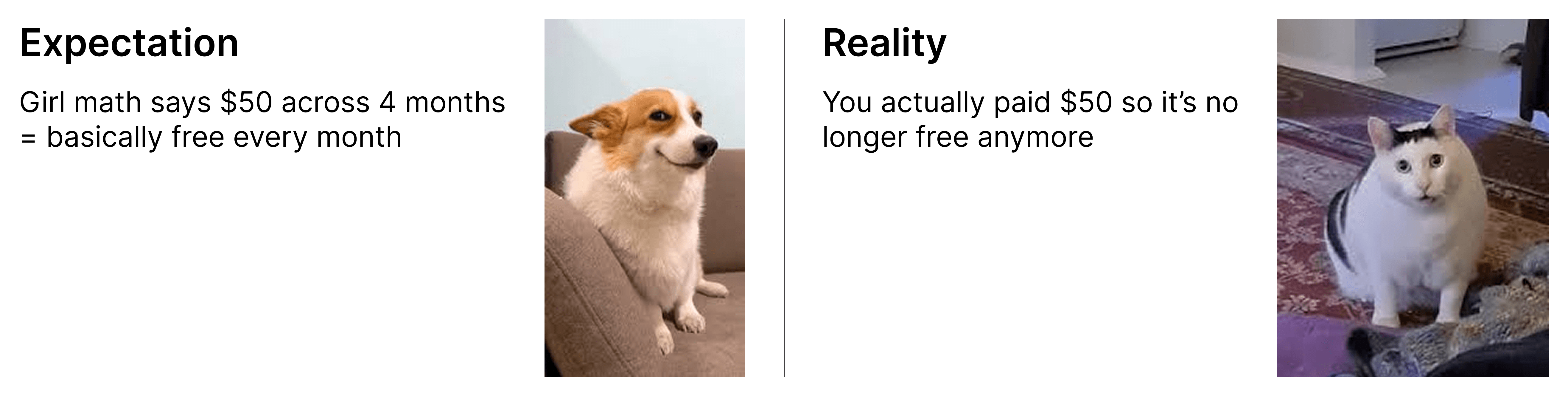
Automatic “pay in full” deductions for transactions under $50 are disruptive for budget-conscious users because users are unaware that it happens
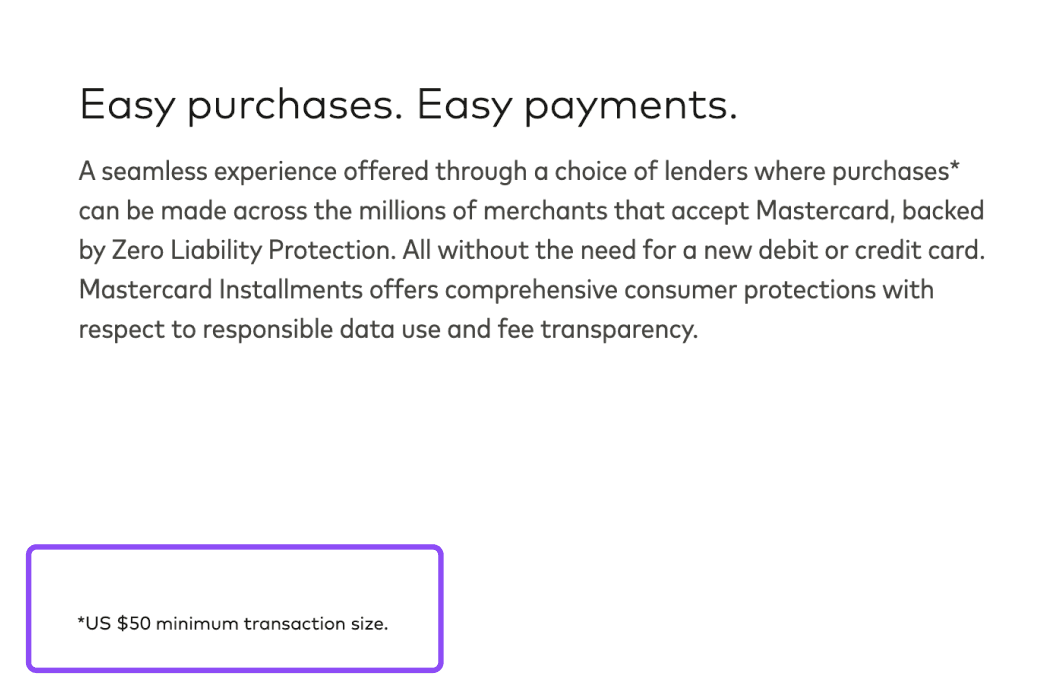
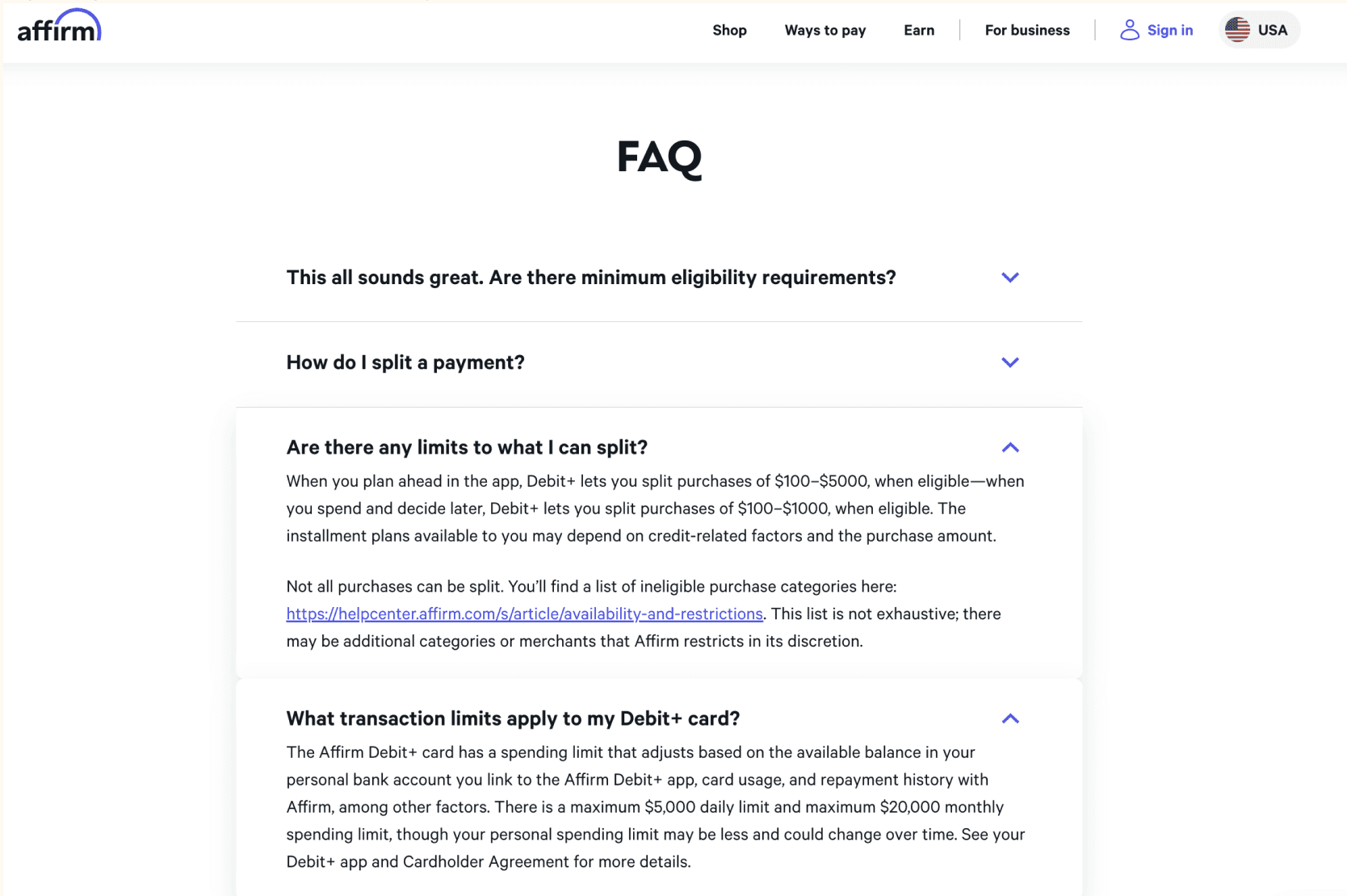
Secondary research confirmed this gap is industry-wide — the rule is either buried in a website FAQ or discovered after the fact on a statement.
Min threshold info in product description on website footer
→ users cannot find this information easily
FAQs would state the minimum threshold on their website FAQ
→ users would have to seek out this information instead of it being presented to them
Most BNPL transactions are above $50, so the issue is invisible in aggregate — but credit-cautious users will churn after a single bad experience, and splitting payments often carries low or 0% interest, which makes the surprise feel like a penalty on the smallest, most ordinary purchases.
Goal
Make users feel informed and in control of their repayment method for smaller transactions so they are never surprised by a pay-in-full deduction
Central question: Where in the flow does the $50 threshold need to appear so users feel informed without feeling overloaded?
My first proposal was to let users set their own installment threshold at signup — giving them direct control over which transactions get split.
Constraint: Stakeholder discovery revealed the $50 threshold is a fixed bank requirement and technically non-negotiable.
Solution: Shifted the strategy from customization to real-time transparency and educational onboarding. I focused on surfacing the "pay in full" rule during signup and the transaction moment to ensure users feel certain and in control of their spending.
Validation — Disclosure approaches tested
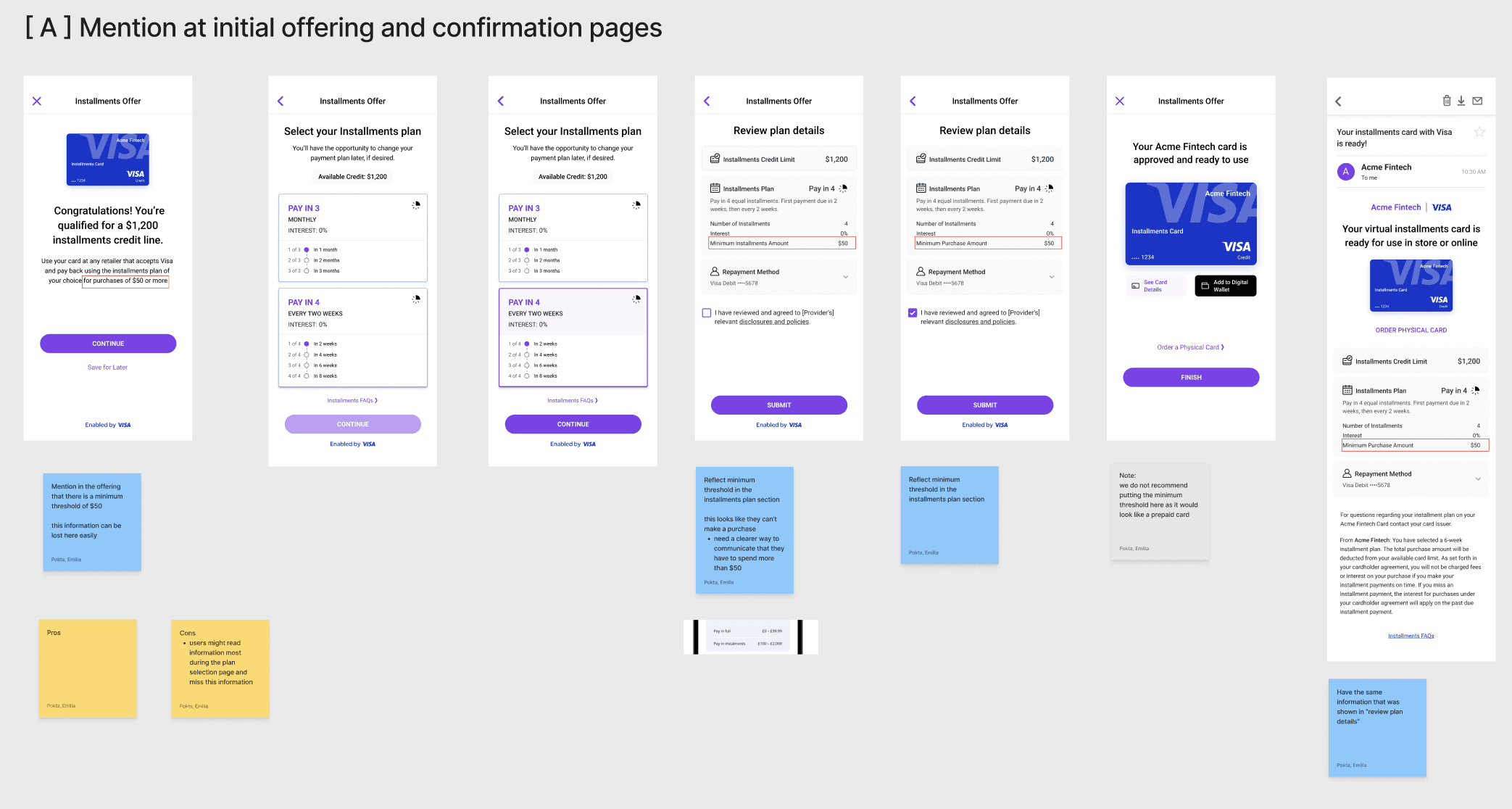
Option A — Most minimal
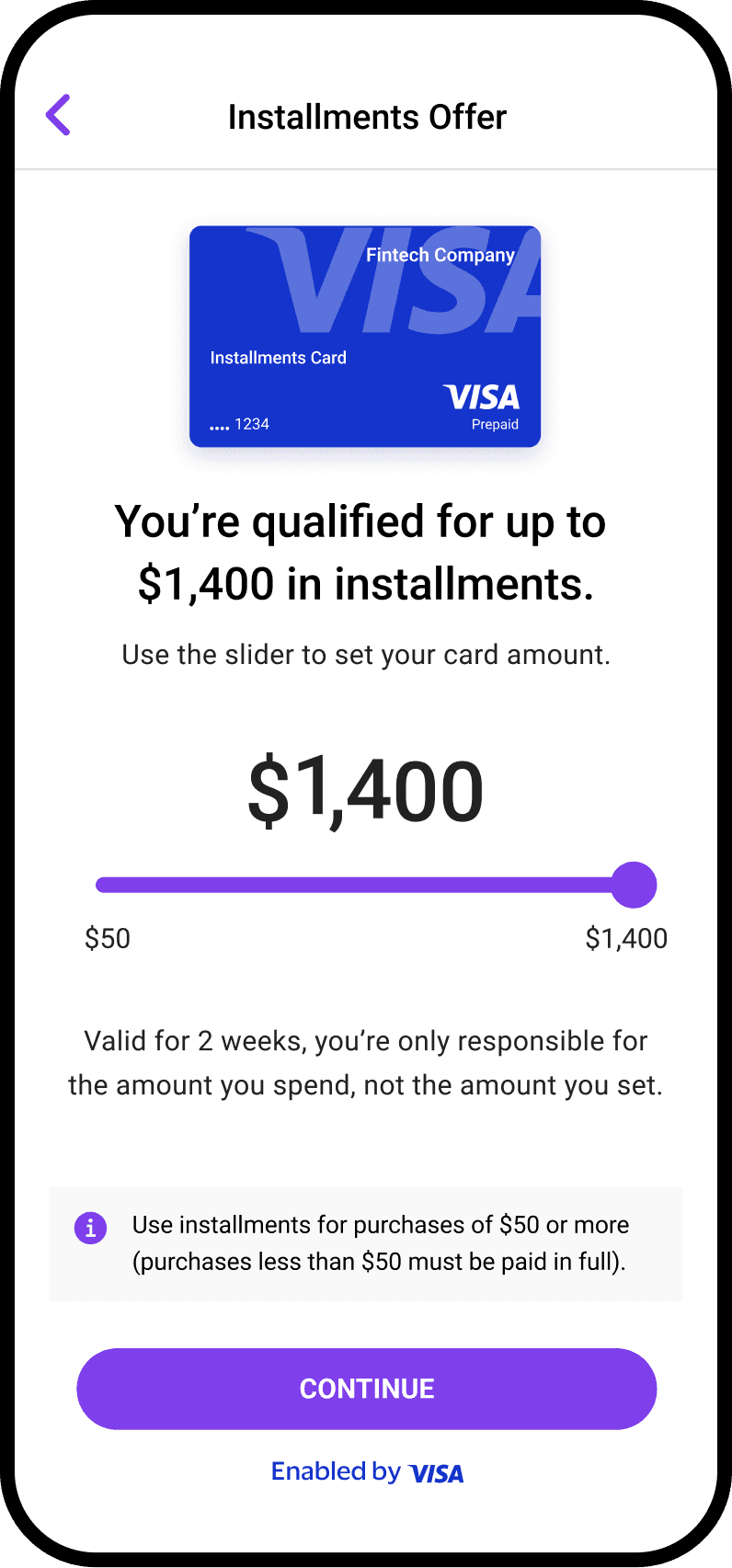
Only mention the pay in full at the initial offer section and confirmation. The assumption here is that we should surface this information as early as possible and reinforce it at the end, without showing it while users select plans since the $50 minimum applies to all plans.
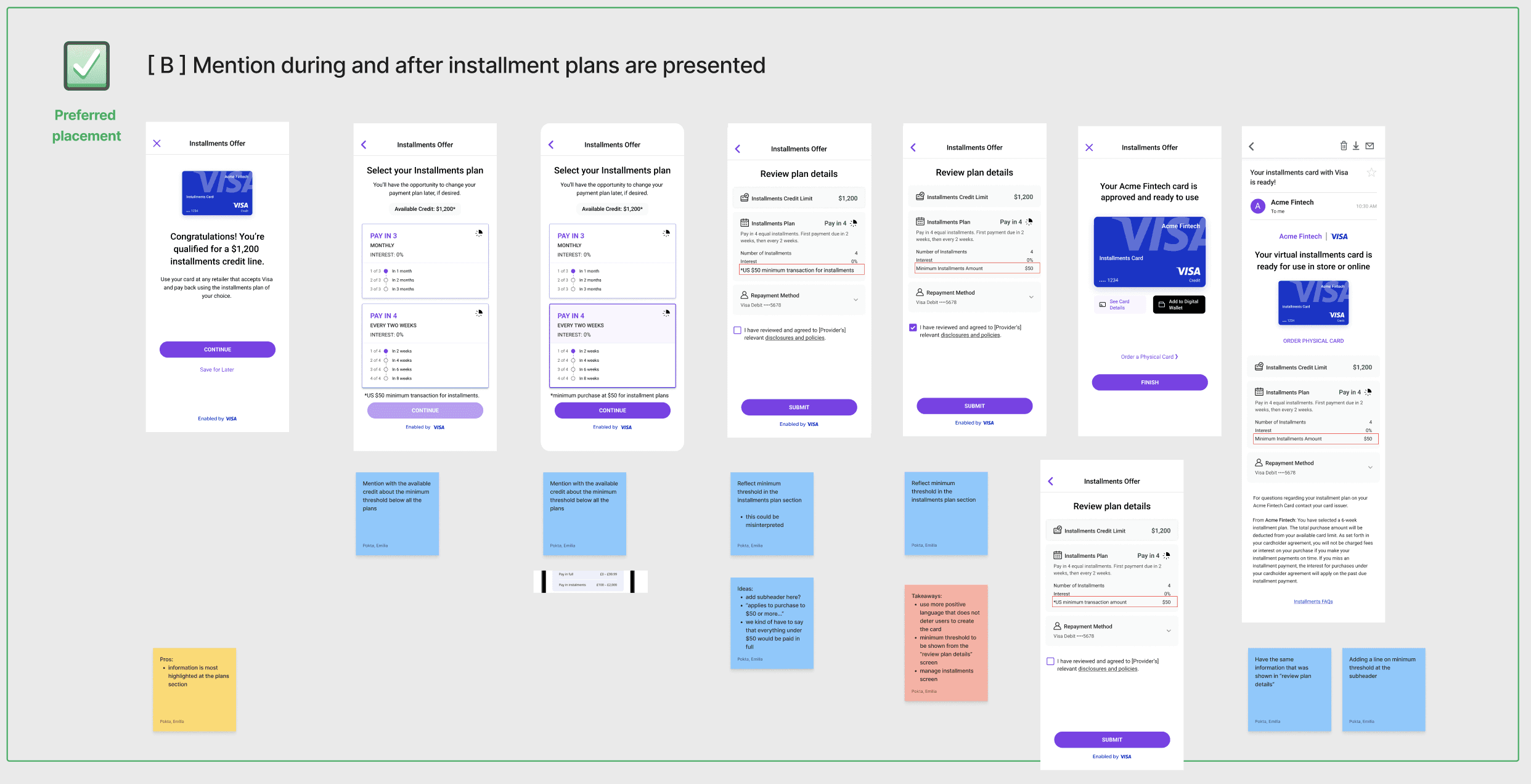
Option B — Moderate (preferred)
Mention only when the plans are already selected. The hypothesis here is that users only care about offer rates when selecting plans. Telling users about the min threshold at this point does not affect plan selection, but users deserve user education and transparency at the confirmation/review pages.
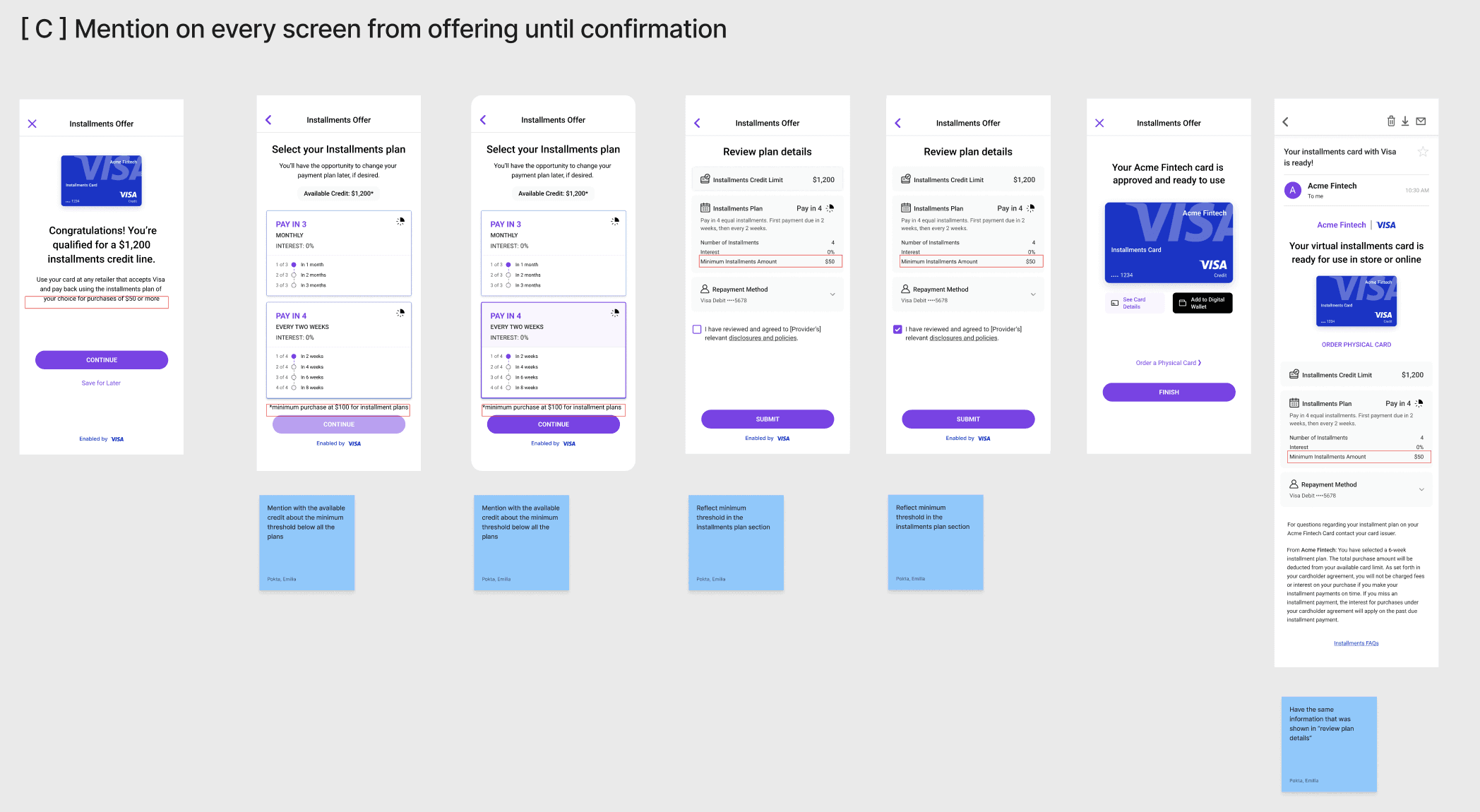
Option C — Most intrusive
Show the threshold on every screen from offer to confirmation. The assumption is that consistency builds trust — users would rather see the same information repeatedly than be surprised once.
Research results
Findings from a 24-participant unmoderated study across the US, UK, Japan, and Australia (usertesting.com, Feb 2023) testing how clearly the $50 threshold lands across enrollment, checkout, and the post-purchase statement.
Baseline insight: most participants found the policy itself fair and clear, and nearly all understood the distinction between “payment method” and “repayment method.” The gaps were specifically about timing and visibility — when and how the rule got surfaced — not the rule itself. Three themes structured the findings: Timing + Context, Repetition + Reinforcement, and Transparency.
Finding 1: Even though the $50 threshold appears 4 times during enrollment, users still missed it
Iterative testing closed a comprehension gap on the $50 pay-in-full threshold: most users missed it at baseline (4 of 24 understood it), after redesigning, 7 of 10 did in the final round. The redesign focused on the visual treatment- highlighting the $50 pay-in-full threshold text closer to CTA and in a highlighted box.
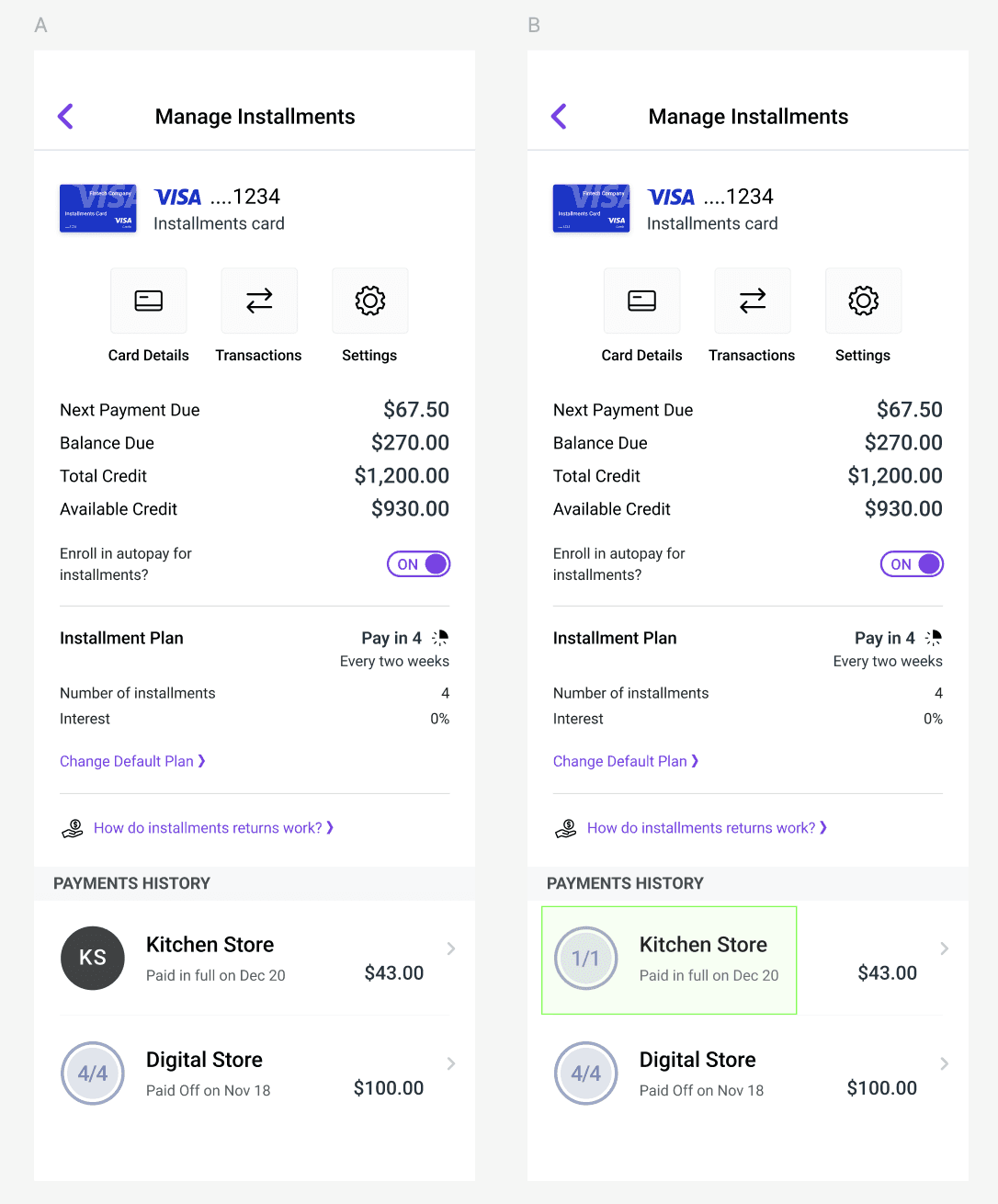
Finding 2: Users couldn’t quickly identify which transactions were paid in full vs. pending installments
In a same-week follow-up study, 7 of 10 participants preferred sequential numbering ('1/1' for paid in full, '0/4' for pending installments) over merchant initials like 'KS'.
" transform="translate(7.619 7.37)" width="9.89946px"/><path d="M 0 8.485 L 0 0" fill="transparent" height="8.485330000000001px" id="u3F5BT_W_" stroke-dasharray="" stroke-linecap="round" stroke-linejoin="round" stroke-width="1.5" stroke="rgb(0, 0, 0)" transform="translate(17.519 7.37)" width="1px"/><path d="M 0 0 L 8.485 0" fill="transparent" height="1px" id="WuExV3vAI" stroke-dasharray="" stroke-linecap="round" stroke-linejoin="round" stroke-width="1.5" stroke="rgb(0, 0, 0)" transform="translate(9.033 7.37)" width="8.485299999999999px"/></g></svg>)