Empowering credit-fearful users by increasing user control and transparency with Visa Flex
One physical card that switches between debit and credit modes via a mobile app — no new card number, no waiting, no separate application
Impact
Validated a transaction model that gave users more control and transparency: 25 of 30 testers preferred keeping debit and credit visually separate but close together, rather than fully merged into one screen. I led transaction model exploration, prototyped regional concepts, and used testing to align PMs on the final direction.
Validated a transaction model that gave users more control and transparency: 25 of 30 testers preferred keeping debit and credit visually separate but close together, rather than fully merged into one screen. I led transaction model exploration, prototyped regional concepts, and used testing to align PMs on the final direction.
Company
Company
Visa
Visa
Duration
Duration
22 weeks
22 weeks
Team
Team
5 PMs, 2 Designers
5 PMs, 2 Designers
Background
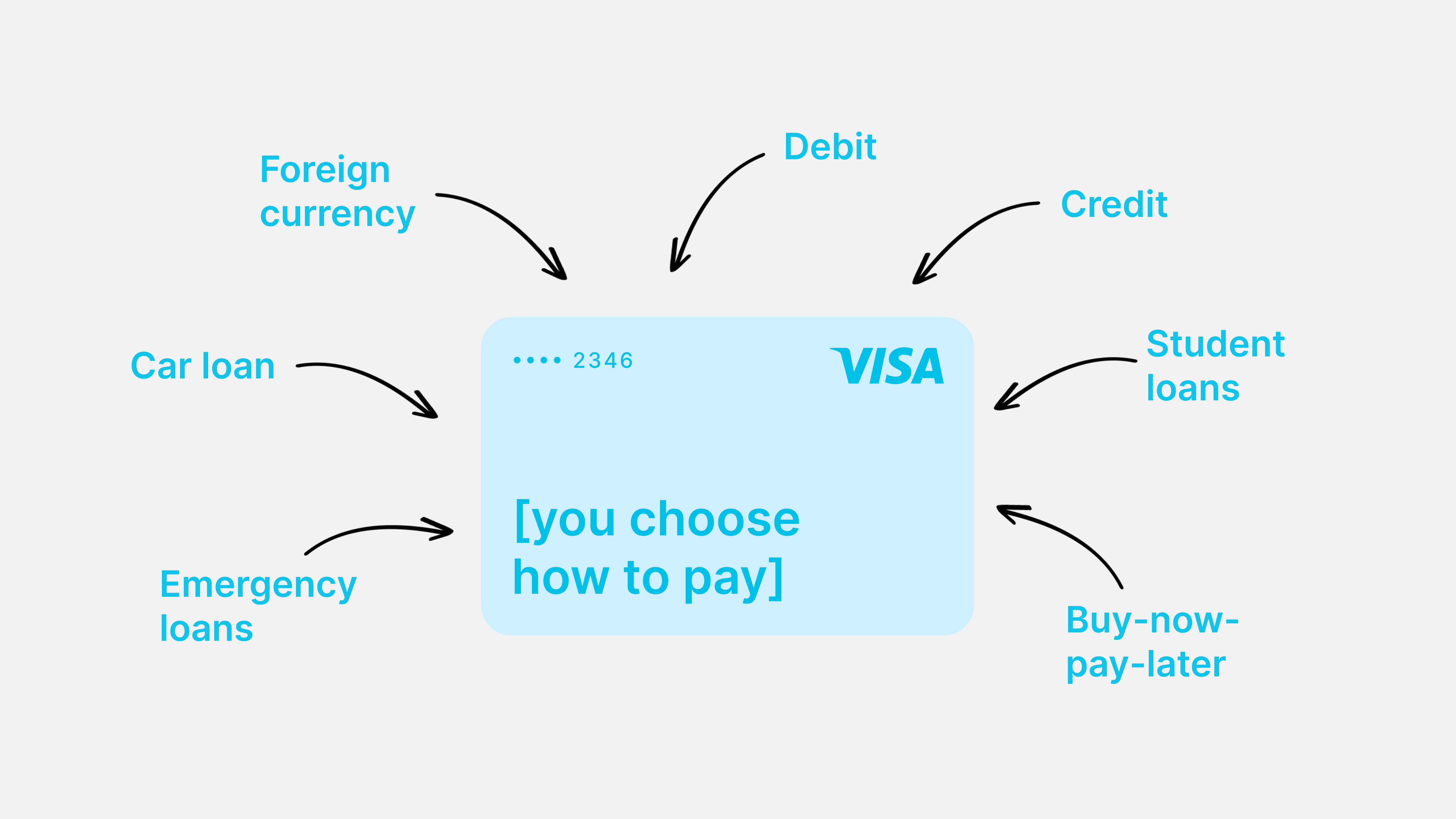
Flex Credentials was an early step toward Visa’s vision for a single, ‘Visa mega card’: one credential that could support multiple ways to pay, including debit and credit. My work focused on translating that business ambition into an experience that felt understandable and trustworthy for credit-cautious users.
Flex Credentials was an early step toward Visa’s vision for a single, ‘Visa mega card’: one credential that could support multiple ways to pay, including debit and credit. My work focused on translating that business ambition into an experience that felt understandable and trustworthy for credit-cautious users.
Problem
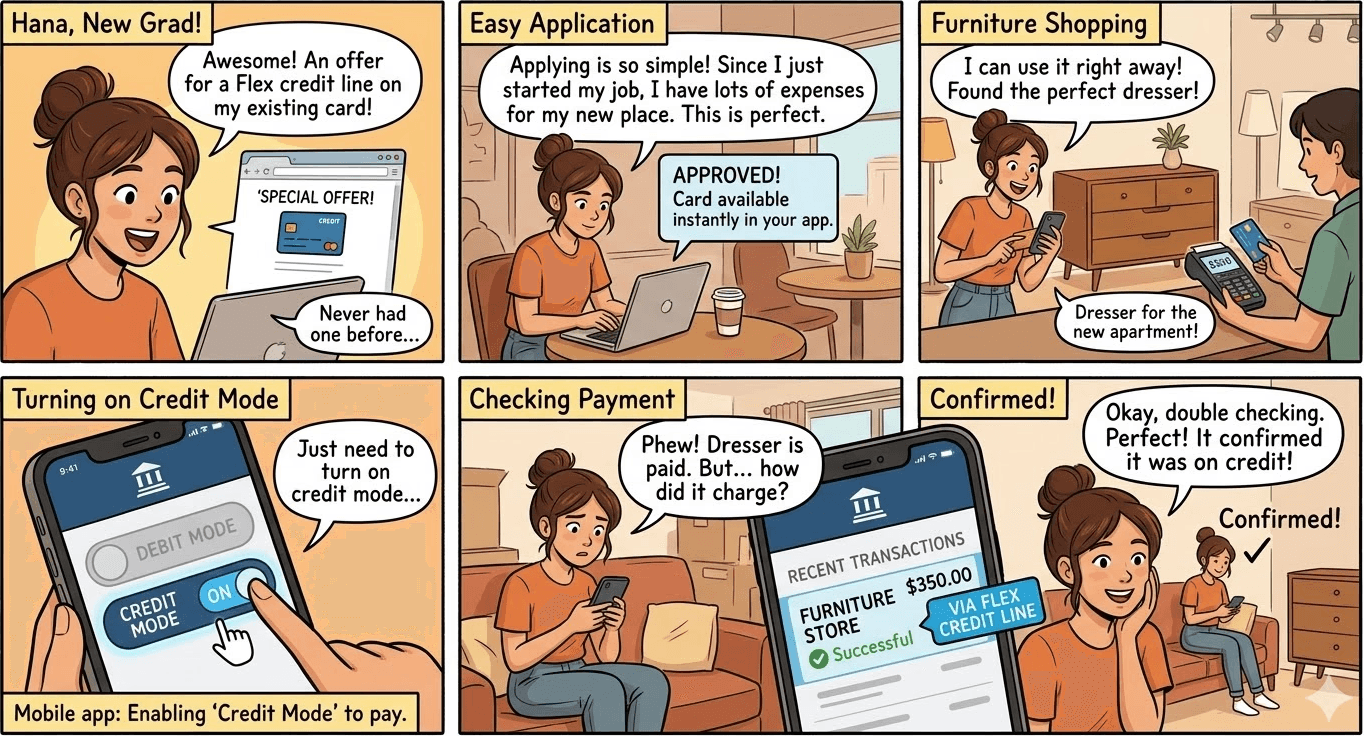
Why this matters to Visa: these solutions are sold to banks as an API (B2B), who implement them for end users (B2C). Banks can offer more credit lines; Visa benefits from the increased transaction volume. The design challenge was delivering that business upside without alienating credit-cautious users.
Why this matters to Visa: these solutions are sold to banks as an API (B2B), who implement them for end users (B2C). Banks can offer more credit lines; Visa benefits from the increased transaction volume. The design challenge was delivering that business upside without alienating credit-cautious users.
Goal
One card, 2 spending modes - controlled from your mobile app
One card, 2 spending modes - controlled from your mobile app
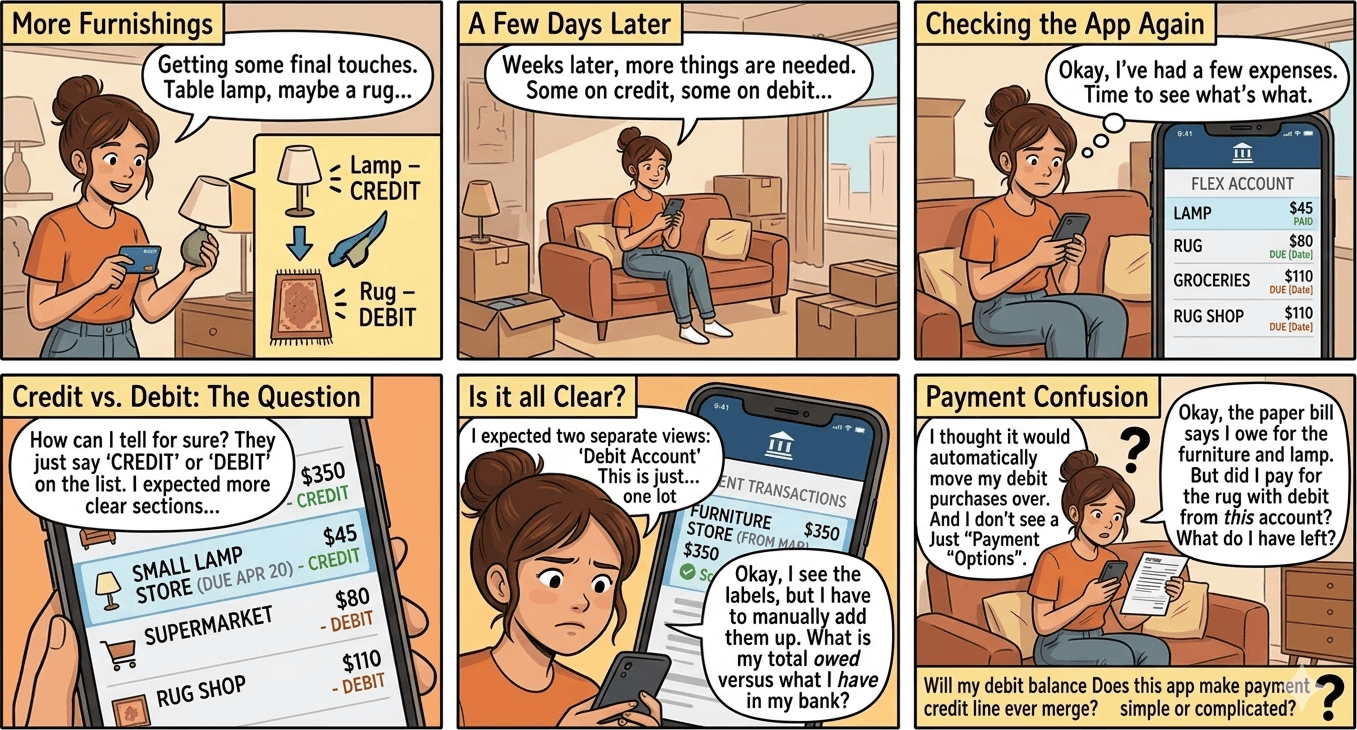
The core design challenge was transaction clarity: after users switch between debit and credit on the same physical card, how should their activity appear in the mobile banking app? The goal is to design how users should read their transactions after making multiple credit and debit transactions on the same card.
The core design challenge was transaction clarity: after users switch between debit and credit on the same physical card, how should their activity appear in the mobile banking app? The goal is to design how users should read their transactions after making multiple credit and debit transactions on the same card.
Central question: Should debit and credit purchases appear in one combined transaction feed, or remain visually separate?
Central question: Should debit and credit purchases appear in one combined transaction feed, or remain visually separate?
The design I proposed
The design I liked
US approach (most radical)
US approach (most radical)
Validation - Regional Approaches Tested
Validation - Regional Approaches Tested
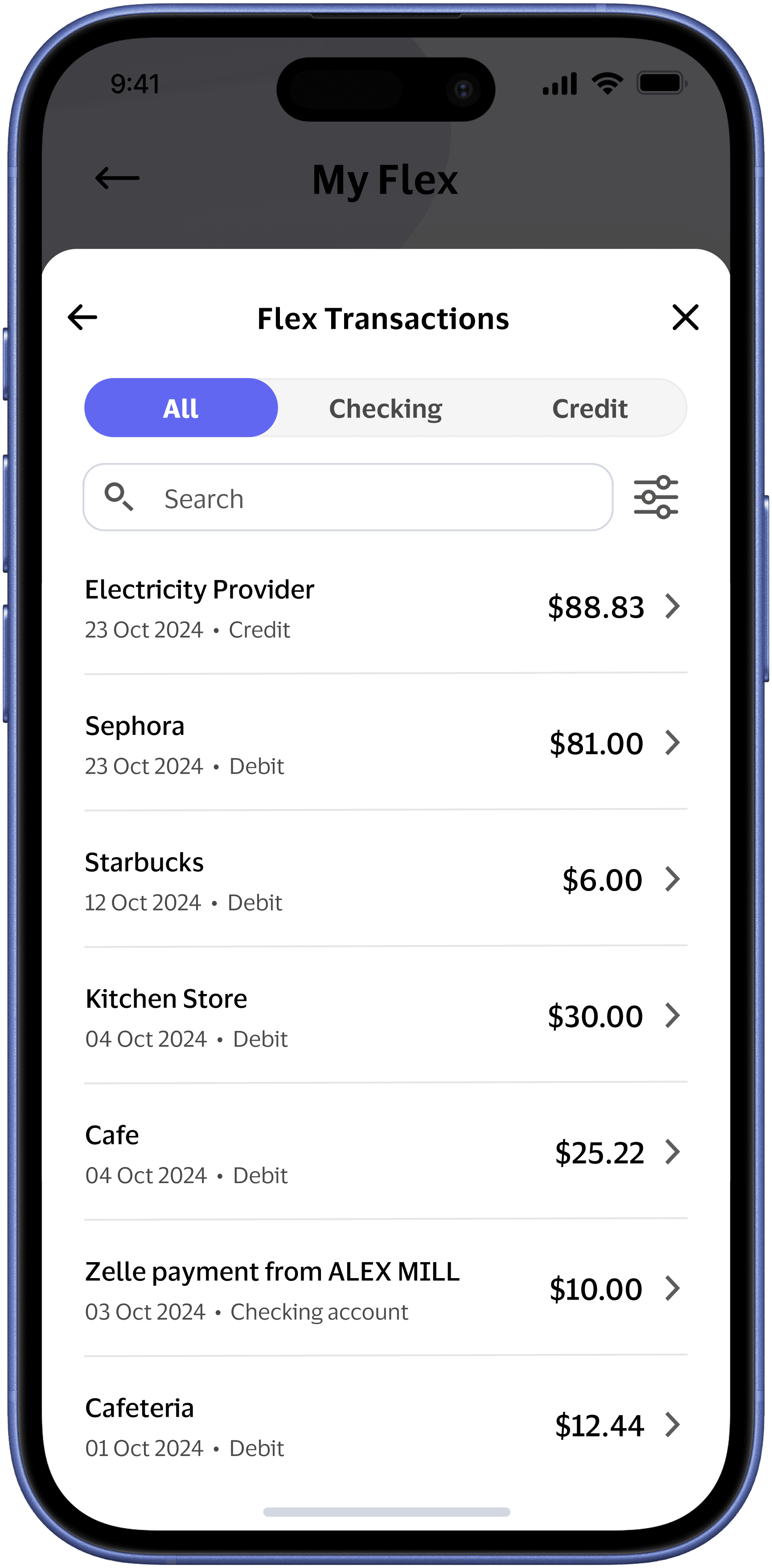
Product stakeholders initially favored a more radical approach for the US launch: fully merging debit and credit activity to reinforce the “one card” concept. Testing showed that this created trust issues for users, who wanted the convenience of one card without losing visibility into how they were spending.
Product stakeholders initially favored a more radical approach for the US launch: fully merging debit and credit activity to reinforce the “one card” concept. Testing showed that this created trust issues for users, who wanted the convenience of one card without losing visibility into how they were spending.
US (Most Radical): Fully merged transactions in a single list to emphasize the "one card" concept and differentiate from traditional banking
US (Most Radical): Fully merged transactions in a single list to emphasize the "one card" concept and differentiate from traditional banking

Japan (Moderate): One Flex card with side-by-side toggle-able views of debit and credit transactions, but never combined.
Japan (Moderate): One Flex card with side-by-side toggle-able views of debit and credit transactions, but never combined.

UK (Most Conservative): Completely separate accounts - doesn't even treat it as one card, just two separate credit/debit accounts
UK (Most Conservative): Completely separate accounts - doesn't even treat it as one card, just two separate credit/debit accounts

Results
Results
Testing outcome: Users preferred an in-between approach that acknowledges one card at a high level but maintains separation for transparency and control
Testing outcome: Users preferred an in-between approach that acknowledges one card at a high level but maintains separation for transparency and control
Debit and credit, close together but clearly separate
Debit and credit, close together but clearly separate
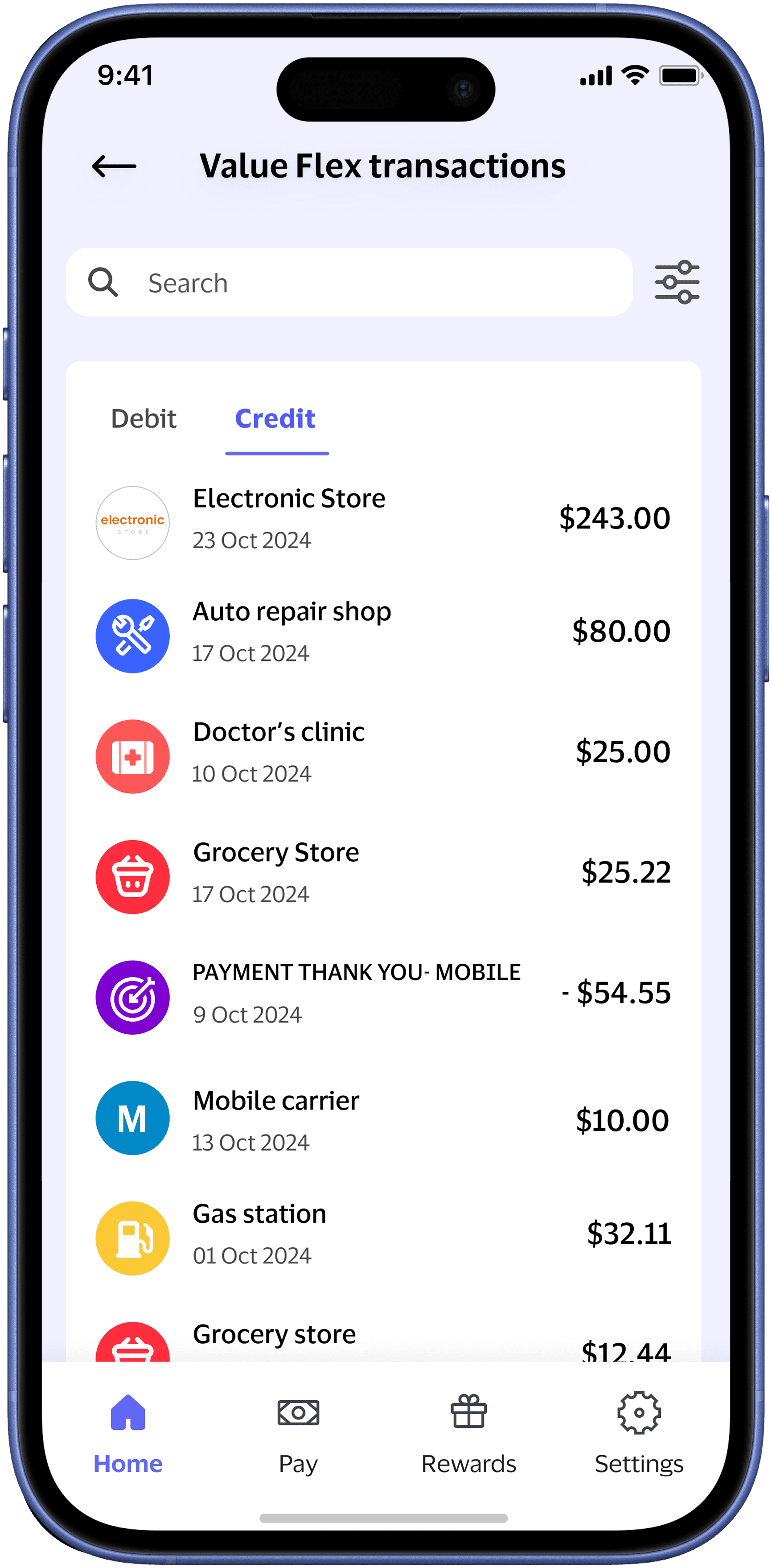
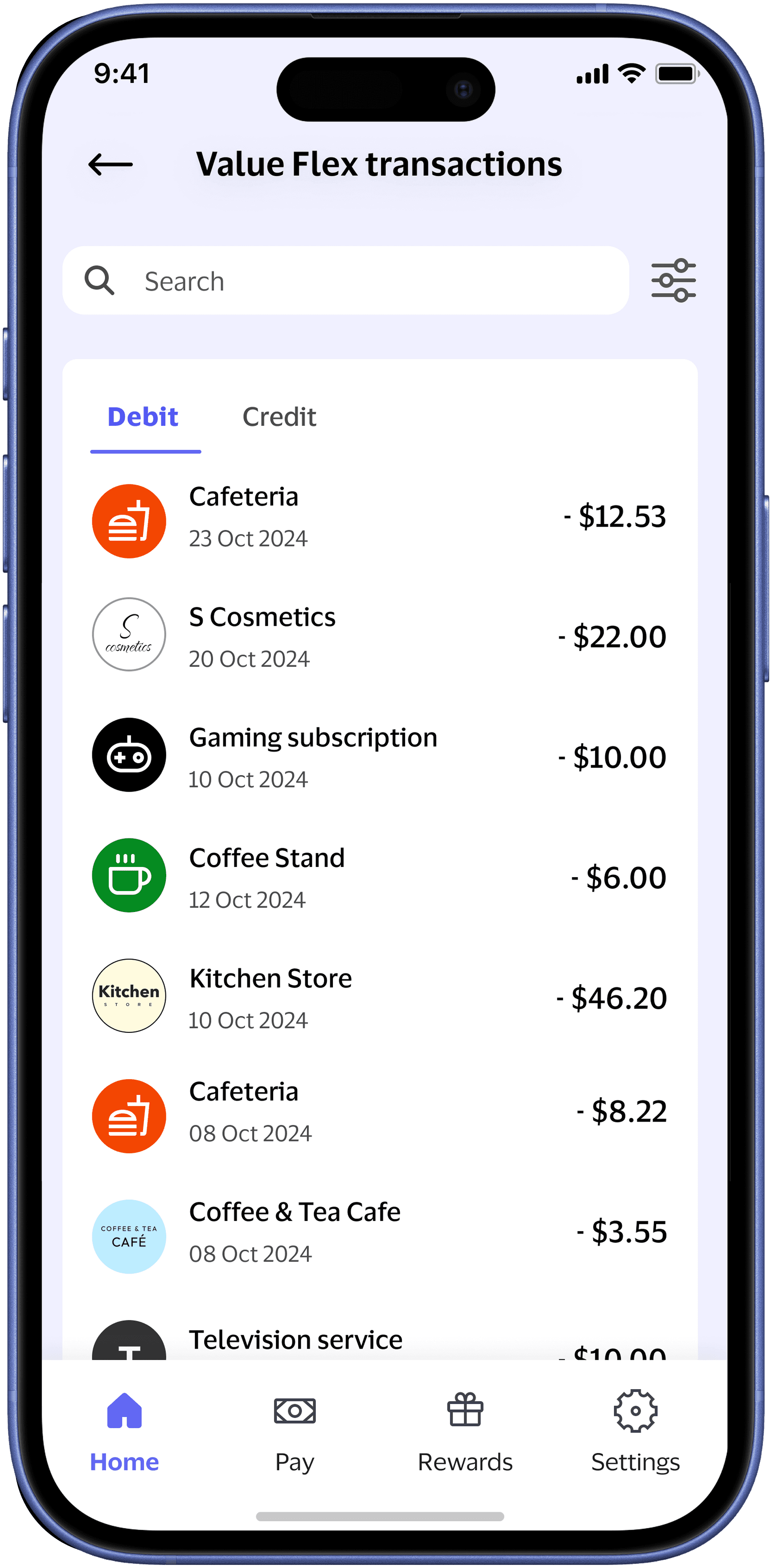
We chose to show debit and credit close together but visually distinct, anchored by a spending summary that surfaces remaining balance. In testing, 83% of users (25 of 30) preferred this layout — they wanted debit and credit kept separate, but side by side rather than split across the interface.
We chose to show debit and credit close together but visually distinct, anchored by a spending summary that surfaces remaining balance. In testing, 83% of users (25 of 30) preferred this layout — they wanted debit and credit kept separate, but side by side rather than split across the interface.
A spending summary that highlights remaining balance
A spending summary that highlights remaining balance
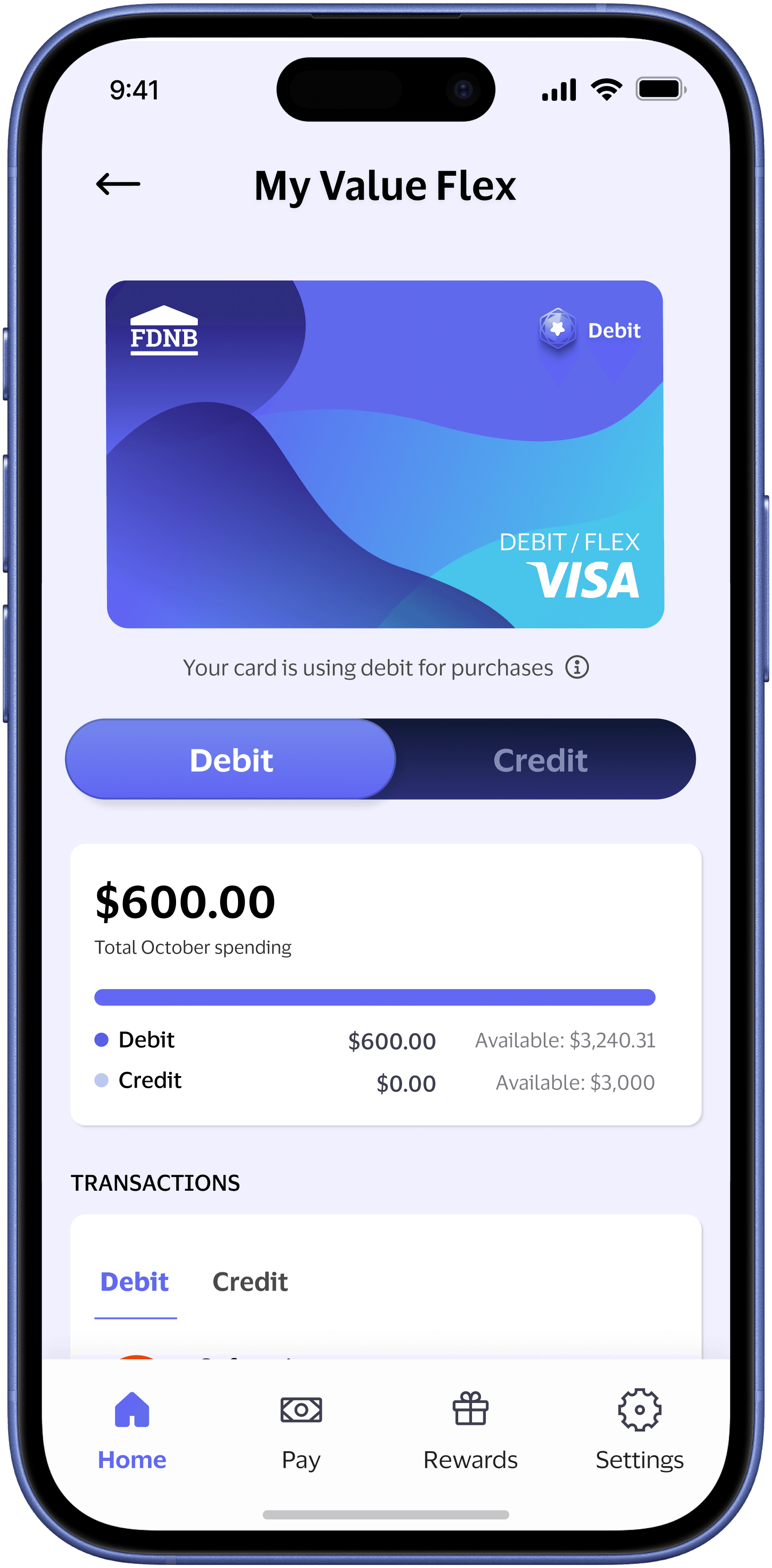
This design adds context to help users choose between payment sources. Individual account access lives on the banking home page, while the Flex home page gives a balance overview. Users can tap "see more" under transactions to view their full history.
This design adds context to help users choose between payment sources. Individual account access lives on the banking home page, while the Flex home page gives a balance overview. Users can tap "see more" under transactions to view their full history.
More Projects
Enabling PMs from 2,700+ companies to easily maintain metrics and improve user sharing
Enabling PMs from 2,700+ companies to easily maintain metrics and improve user sharing
" transform="translate(7.619 7.37)" width="9.89946px"/><path d="M 0 8.485 L 0 0" fill="transparent" height="8.485330000000001px" id="u3F5BT_W_" stroke-dasharray="" stroke-linecap="round" stroke-linejoin="round" stroke-width="1.5" stroke="rgb(0, 0, 0)" transform="translate(17.519 7.37)" width="1px"/><path d="M 0 0 L 8.485 0" fill="transparent" height="1px" id="WuExV3vAI" stroke-dasharray="" stroke-linecap="round" stroke-linejoin="round" stroke-width="1.5" stroke="rgb(0, 0, 0)" transform="translate(9.033 7.37)" width="8.485299999999999px"/></g></svg>)
Amplitude
Removing “price shock” for budget-conscious BNPL users by increasing user comprehension
Visa
Removing “price shock” for budget-conscious BNPL users by increasing user comprehension
Visa